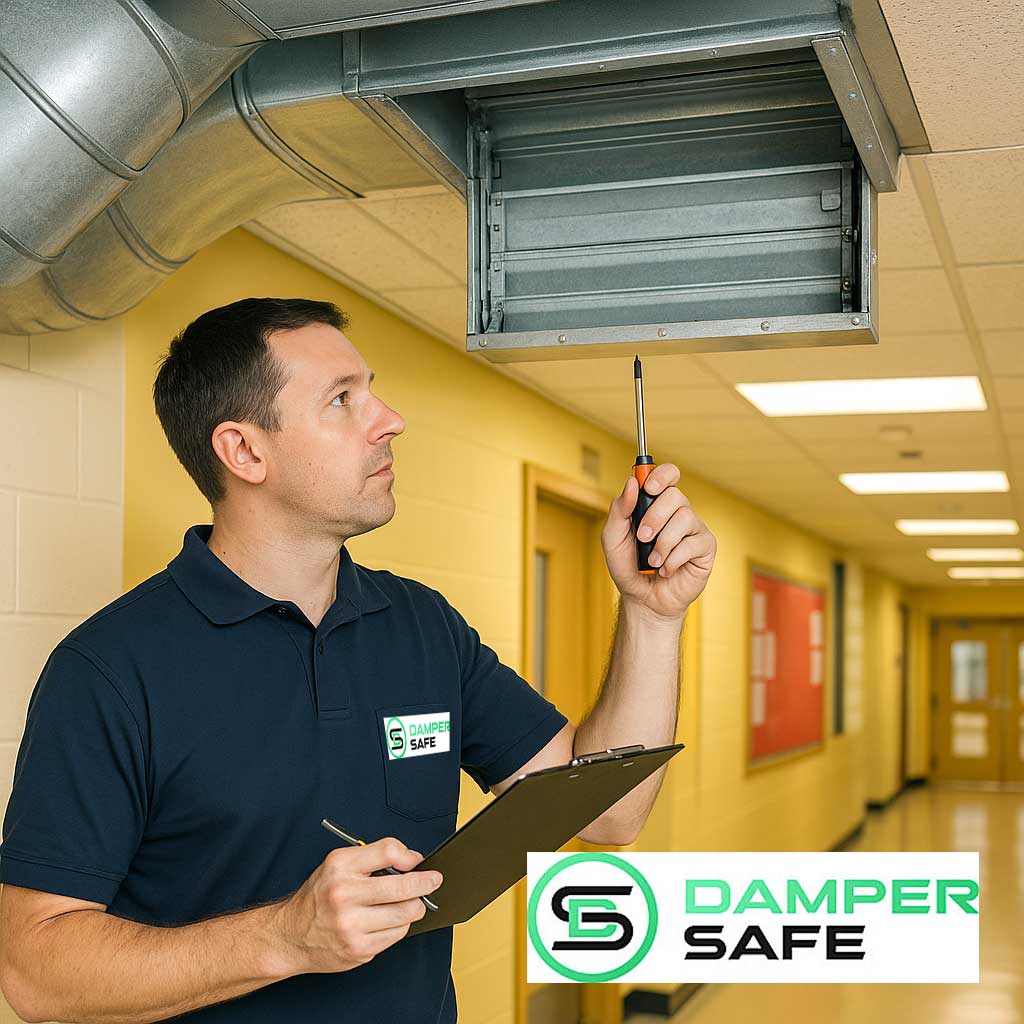
Fire Damper Testing London: Services in London & Kent

Our services

Specialist Fire Damper Testing London & Kent

At Damper Safe London, we provide specialist fire damper testing services across London, Kent and the wider South East, helping building owners, facilities managers and responsible persons keep their premises safe and compliant.

Our services are designed to support the requirements of the Building Safety Act 2022, the Regulatory Reform (Fire Safety) Order 2005 and British Standard BS 9999:2017. As part of meeting these fire safety requirements, regular fire damper testing helps confirm that your fire dampers are fully operational, properly maintained and ready to perform should a fire occur.

As part of our testing process, we provide clear fire damper testing certification and a detailed report, including photographic evidence where required. This gives you a reliable record for audits, insurance, safety reviews and ongoing regulatory compliance.

Fire dampers should be tested at least annually, with more frequent testing recommended for high-risk, dust-laden or heavily polluted environments. Smoke damper testing, spring-operated fire damper testing and fire and smoke damper inspections should always be carried out by competent professionals using the correct operational testing methods.
The-Science-Behind-Fire-Dampers--How-They-Work-to-Contain-Fire-&-Smoke

What Are Fire Dampers?

Fire dampers are critical components in a building’s fire safety system. They are installed within ductwork and ventilation systems, including air conditioning ducts, to help prevent the spread of fire and smoke through the building.

Fire damper installations are usually positioned where ductwork passes through fire-rated or fire-resistant walls, ceilings or floors, particularly between fire zones. By closing off these openings, fire dampers help maintain compartmentation, protect escape routes and support the building’s fire protection system.

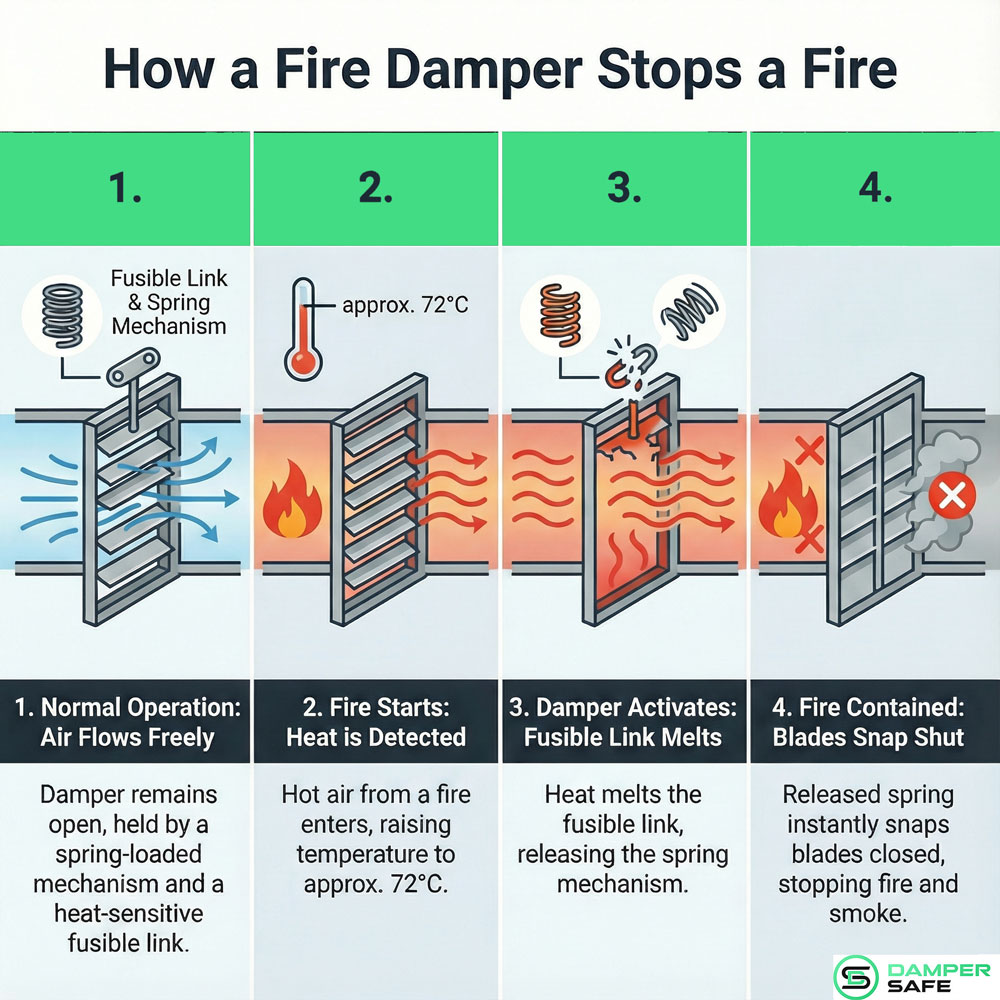
Most fire dampers operate through a fire damper mechanism that reacts to a rise in temperature. In many systems, this detection method relies on a fusible link, which melts when exposed to high heat and allows the damper to close. This seals the ductwork and helps stop fire inside the building’s ventilation system from spreading further.

Some systems also include motorised smoke dampers or fire and smoke damper units linked to a fire alarm system. These are designed to close automatically when triggered, helping to control smoke movement as part of the wider fire prevention strategy.

Given their role in protecting building occupants, regular fire damper testing and maintenance are essential to ensure each damper can operate correctly in the event of a fire.

Fire damper testing

Our Comprehensive Fire Damper Testing Process

Our fire damper testing services in London and Kent follow a clear, structured testing process designed to confirm that each damper is accessible, clean, unobstructed and able to close correctly.

This includes thorough inspections, operational testing, cleaning where required, drop testing, photographic evidence and a detailed report for your compliance records. Where access panels are missing, or dampers cannot be reached safely, we can identify the issue and recommend suitable remedial work.

Scheduling regular maintenance checks at regular intervals is essential, with more frequent testing in areas exposed to dust, grease, pollution or heavy use. Poorly maintained fire dampers can increase fire risk, compromise building fire safety and create problems during audits, insurance reviews or post-incident investigations.

Visual Inspection:

We begin with a detailed visual inspection, checking each fire damper for correct orientation, clear access, removed transit tapes, intact fusible links, corrosion, obstruction and any signs of faulty fire dampers.

Drop Testing:

Each damper undergoes drop testing, where the fusible link or release mechanism is activated to confirm that the damper closes as intended. We check that the blade fully closes, seals the ductwork and is not restricted by corrosion, dirt, damage or obstruction.

This operational testing helps confirm that your fire dampers operate correctly and can perform as intended in the event of a fire, in line with UK fire safety regulations and relevant standards.

Cleaning and Lubrication:

General use of ventilation systems can create gradual contamination, allowing dust, debris and grease to build up around fire dampers. As part of fire damper maintenance, we clean and lubricate dampers where required to protect the fire damper mechanism and help ensure they remain properly maintained and fully operational.

This is especially important in busy commercial properties, healthcare premises, schools, retail units and offices across central London, North Kent and the surrounding areas.

Digital Reporting:

After testing, we provide a comprehensive digital report and fire damper testing certification, including photographic evidence of each damper in its ‘as found’, ‘closed’ and ‘reset’ states.

These detailed reports are auditable, easy to access and suitable for compliance reviews, insurance records, asset registers and Golden Thread safety information where applicable. This gives building owners and responsible persons a clear record of fire damper testing compliance across London and Kent.

Fire-Safety-Services
Duct-and-Damper-Compliance-for-Schools-Facilities-in-the-UK

Compliance and Expertise

At Damper Safe, we understand the importance of regulatory compliance in fire safety. Our engineers are experienced, trained and certified to relevant industry standards, including SVQ 3 in Heating & Ventilating Ductwork Planning and Installation and SCQF Level 5 Fire & Smoke Damper qualifications.

Our work supports compliance with BS 9999:2017, the Regulatory Reform (Fire Safety) Order 2005 and other relevant UK fire safety requirements. This helps safeguard your building, protect building occupants and ensure your fire safety systems are properly inspected, tested and documented.

Addressing Common Challenges in Fire Damper Testing

Fire damper testing in London can be challenging in older, occupied or high-rise buildings where access is restricted. In Kent’s commercial, healthcare and public-sector premises, blocked ductwork, dirty ventilation ducts or missing access panels can also affect testing and performance.

Our engineers are experienced in managing these challenges safely and efficiently. Where dampers cannot be reached, are damaged or fail to close correctly, we provide clear recommendations for remedial work.

Effective fire damper testing and maintenance helps keep your systems in optimal working condition, supports fire compartmentation and can assist fire and rescue services by reducing the spread of fire and smoke during an emergency.

Consequences of Neglecting Fire Dampers

Failing to maintain and test fire dampers can create serious risks for building owners, responsible persons and occupants. Poorly maintained fire dampers may fail to operate correctly in the event of a fire, allowing fire and smoke to move through ductwork and ventilation systems.

This can increase the risk of fire damage, compromise escape routes and weaken the building’s fire protection strategy. It may also lead to non-compliance with fire safety regulations, enforcement action, insurance difficulties and additional liability if the building’s fire safety systems are found to be inadequate.

Regular fire damper testing services help prevent the spread of fire, protect building occupants and provide evidence that your dampers have been inspected, tested and properly maintained.

Fire-Dampers-in-Office-Buildings-_-Workplace-Safety-&-Compliance

Responsibilities of a Building Owner

Building owners, facilities managers and the responsible person all play a key role in maintaining fire safety standards. One of their core duties is to arrange regular fire damper testing services and ensure that all fire dampers, including spring-operated fire dampers, remain fully operational and compliant.

By scheduling comprehensive fire damper testing at the correct fire damper testing frequency, building owners can identify faulty fire dampers before they compromise the building’s fire safety system.

It is also important to keep detailed records of all damper testing, including photographic evidence, inspection findings and any remedial recommendations. This documentation supports regulatory inspections, insurance reviews and Golden Thread information where applicable, while giving confidence that the building’s ventilation system can help prevent the spread of fire and smoke in an emergency.

Fire damper testing

Why choose Damper Safe?

Choosing Damper Safe means choosing a specialist partner committed to safety, compliance and clear reporting. Whether you manage properties in Canterbury, Maidstone, Bromley, central London or elsewhere across London and Kent, our team can perform fire damper testing with care, accuracy and minimal disruption.

We help ensure that your fire safety systems remain compliant with current requirements and ready to protect your building and its occupants.

Fully Insured

Damper Safe is fully insured, giving you confidence that your fire safety work is being handled by trained, certified and responsible professionals.

Satifaction Guarantee

We stand by the quality of our work, delivering reliable and effective fire safety solutions designed around the needs of your premises.

Customer Service

Our customer service is built around clear communication, dependable scheduling and practical support, helping ensure your fire damper testing is completed on time and within budget.

Affordable Services

We provide cost-effective fire safety services without compromising on quality, compliance or attention to detail.

Summary

Damper Safe provides specialist fire damper testing services across London, Kent and the wider South East, helping building owners, facilities managers and responsible persons maintain safe, compliant premises. The service includes visual inspection, operational testing, drop testing, cleaning where required, photographic evidence and a detailed report for compliance records.

Regular fire damper testing helps ensure that fire dampers, smoke dampers and fire and smoke damper systems remain fully operational and ready to help prevent the spread of fire and smoke in the event of a fire. With experienced engineers, clear reporting and a strong focus on regulatory compliance, Damper Safe helps protect building occupants, support fire safety systems and reduce the risks linked to poorly maintained fire dampers.

Frequently Asked Questions

Fire dampers should be tested at least annually, with more frequent testing recommended in high-risk environments where dust, grease, pollution or heavy use may affect performance. The correct fire damper testing frequency depends on the building type, use, risk level and condition of the ventilation system.

Yes. Regular fire damper testing is part of maintaining compliant fire safety systems under UK fire safety regulations, including the Regulatory Reform (Fire Safety) Order 2005 and relevant British Standard BS 9999:2017 guidance. Building owners, facilities managers and the responsible person should ensure that fire dampers are inspected, tested and properly maintained.

Fire damper testing should be carried out by competent professionals with the right training, experience and understanding of fire damper mechanisms, ductwork and ventilation systems. Damper Safe engineers are trained to perform fire damper testing, identify faulty fire dampers and provide clear recommendations for remedial work where required.

Fire damper testing certification usually includes confirmation that each damper has been inspected and tested, along with photographic evidence, inspection findings, damper condition, drop testing results and any recommended remedial action. This provides building owners and responsible persons with a detailed report for compliance, audits, insurance records and ongoing safety management.

Poorly maintained fire dampers may fail to operate correctly in the event of a fire, allowing fire and smoke to spread through ductwork and ventilation systems. This can increase the risk of fire damage, compromise building occupants’ safety, weaken the building’s fire protection system and lead to non-compliance with fire safety requirements.

Yes. Smoke damper testing and fire and smoke damper inspections are important parts of maintaining a safe and compliant building. These systems help control the movement of smoke and support the wider fire prevention strategy, especially when linked to a fire alarm system or building management system.