Fire damper testing certification usually includes confirmation that each damper has been inspected and tested, along with photographic evidence, inspection findings, damper condition, drop testing results and any recommended remedial action. This provides building owners and responsible persons with a detailed report for compliance, audits, insurance records and ongoing safety management.

Fire Damper Surveys and Inspections

Fire dampers are often hidden inside ductwork, ceilings, risers, shafts and plant rooms. Because they are out of sight, they can be missed, left undocumented or become difficult to access over time.

Damper Safe carries out fire damper surveys and inspections in London for building owners, landlords, facilities managers, managing agents and Responsible Persons who need clear information about the fire and smoke dampers in their building.

A survey helps establish where fire dampers are located, whether they can be safely accessed, what condition they appear to be in and whether further fire damper testing or remedial attention may be required.

If your building has incomplete records, unknown damper locations or an upcoming compliance review, contact Damper Safe to arrange a survey.
Fire Damper Inspection London

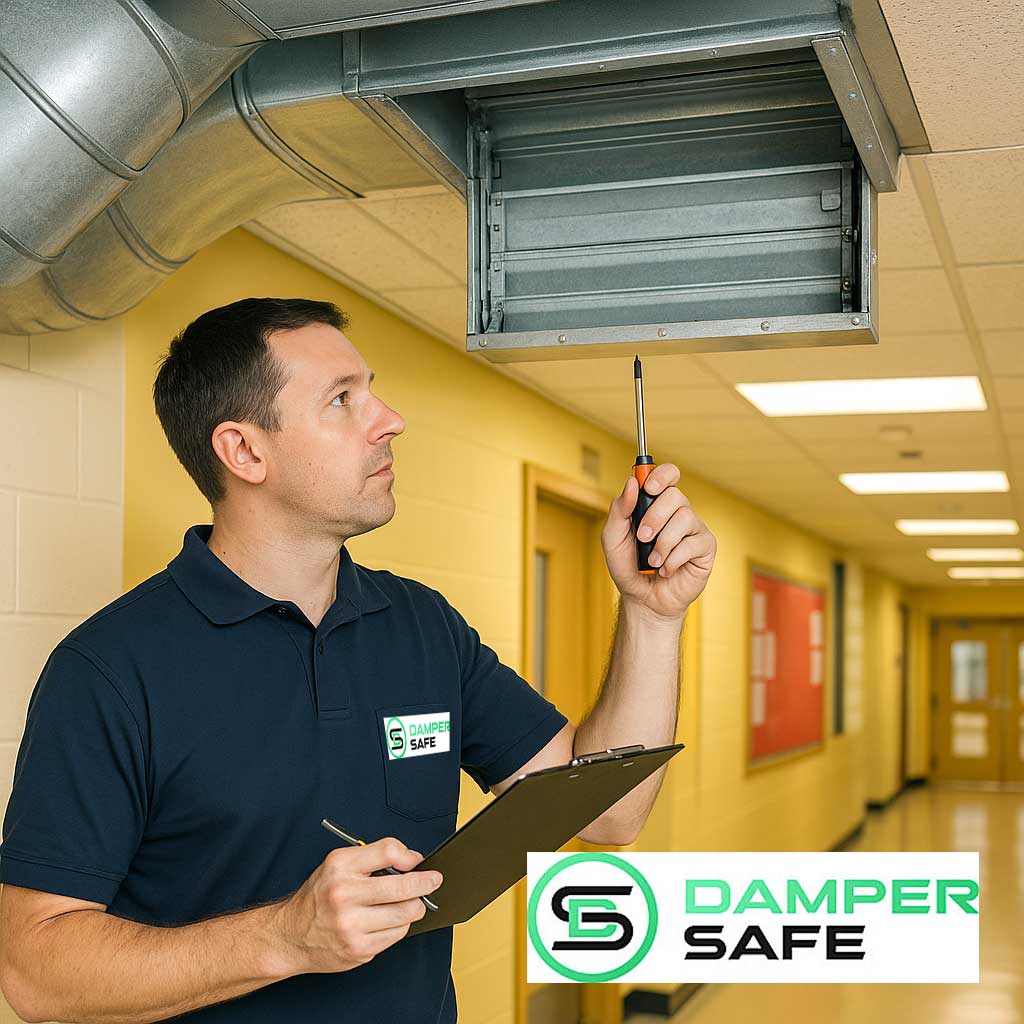
Fire dampers and smoke damper systems form part of a building’s wider fire safety strategy. They are commonly installed where ductwork and ventilation systems pass through fire-rated walls, fire-resistant walls, floors or compartment lines.

In the event of a fire, fire dampers are designed to help reduce the spread of fire and smoke through ventilation systems. For them to support the building’s fire protection system, they need to be accessible, identifiable, and regularly inspected and tested by a competent person.

A fire damper survey provides a practical starting point. It helps turn unknowns into a usable record, especially in buildings where fire dampers have never been mapped, where layout drawings are incomplete or where previous records are out of date.

What a Fire Damper Survey Helps Identify

A survey is not just a visual check of one or two accessible dampers. Its purpose is to build a clearer picture of the fire dampers present across the building.

Duct-and-Damper-Compliance-for-Schools-Facilities-in-the-UK

Depending on the site, the inspection may help identify:

  • Fire dampers that are present but not recorded.
  • Fire dampers that cannot be safely accessed.
  • Missing, damaged or unsuitable access panels.
  • Obstructions within or around ductwork.
  • Visible corrosion, debris or contamination.
  • Unlabelled dampers or unclear asset references.
  • Dampers affected by refurbishment, altered ductwork, or changes to air-conditioning systems.
  • Dampers that may need fire damper testing, drop testing or further investigation.

Where issues are found, they are recorded so the client can decide what further action is needed.

Why Fire Damper Surveys Matter

Fire dampers play a crucial role in compartmentation. If a fire occurs, they are intended to help slow the movement of flames and smoke through building ductwork, supporting escape routes and helping protect building occupants.

However, fire dampers can only be relied on if they can be accessed, inspected and maintained properly. In many buildings, the problem is not simply whether fire dampers exist. The problem is that nobody has a complete record of where they are, when they were last inspected or whether they can be tested.

A survey helps identify practical barriers to regular testing. These may include missing access panels, blocked dampers, incomplete records, damaged components or poor access above ceilings and within service voids.

FAQS on Fire damper testing
Survey and Inspection Process

The exact process depends on the building, access arrangements and available records. Where drawings, layouts or previous asset registers are available, these can help guide the inspection.

A typical fire damper survey may include:

  • Reviewing available layout information where supplied.
  • Locating visible and accessible fire and smoke dampers.
  • Checking whether each damper can be reached safely.
  • Carrying out a visual inspection of accessible dampers.
  • Checking access panels and noting where access is restricted.
  • Recording asset locations, condition notes and access issues.
  • Identifying visible signs of corrosion, obstruction, debris or damage.
  • Recording whether further fire damper testing may be needed.
  • Providing a detailed report with findings and photographic evidence where appropriate.

Where operational testing, smoke damper testing or drop testing is required and can be carried out safely, this can be discussed as part of the inspection scope.
Fire Damper Testing and Inspection Records

Fire damper surveys often sit alongside fire damper testing, but they are not the same thing.

A survey helps identify and document the fire dampers in the building. Fire damper testing checks whether the damper can operate correctly. In some buildings, a survey is needed first because the asset register is missing, incomplete or unreliable.

This is common in older buildings, multi-occupancy premises, schools, healthcare premises, hotels, offices, restaurants and managed residential blocks. Without accurate records, it can be difficult to plan annual testing, demonstrate regulatory compliance or show that fire safety systems are being properly maintained.

Damper Safe can help clients understand what is present, what can be accessed and what needs to be considered next.

Fire-Damper-Testing-Costs-UK-_-Budgeting-for-Compliance
Fire-Dampers-in-Office-Buildings-_-Workplace-Safety-&-Compliance
Our-Fire-Safety-Services

Legal Requirement and Compliance Context

Fire safety in most non-domestic premises is the responsibility of the Responsible Person. Under the Regulatory Reform Fire Safety Order 2005, appropriate fire safety measures must be maintained to help protect people using the building.

British Standard BS 9999:2017 is commonly referenced for fire damper testing. It recommends that fire dampers are tested by a competent person after installation and at regular intervals, normally at least annually. Spring-operated fire dampers and dampers in dusty, greasy or polluted environments may require more frequent testing.

For duty holders, the key point is that fire dampers should not be ignored. They should be inspected, tested regularly where required and properly documented. A survey helps establish the condition of the current records and highlights issues that could prevent proper testing.

Common Issues Found During Fire Damper Inspections

During fire damper inspections, it is common to find problems that would otherwise remain hidden.

These can include inaccessible dampers, missing access panels, unlabelled assets, debris inside ductwork, corrosion, damaged fusible link arrangements, jammed blades, poor installation, altered ductwork and incomplete records.

These issues matter because they may prevent proper closure or make it impossible to perform fire damper testing without further access work. A damper may be installed, but that does not automatically mean it is fully operational or easy to inspect.

Clear reporting allows the client to prioritise next steps based on evidence rather than assumptions.

Reports, Asset Information and Photographic Evidence

After the survey, Damper Safe provides a clear record of the findings. The report may include damper locations, condition notes, access observations, test status where applicable, photographic evidence and recommendations where issues have been identified.

This information can support future inspections, regular fire damper testing, planned maintenance and internal fire safety reviews.

For larger buildings, survey findings can also help create or update a fire damper asset register. This gives facilities teams a more reliable way to track each damper, including its location, access status, inspection history and any noted concerns.
Who Needs a Fire Damper Survey?

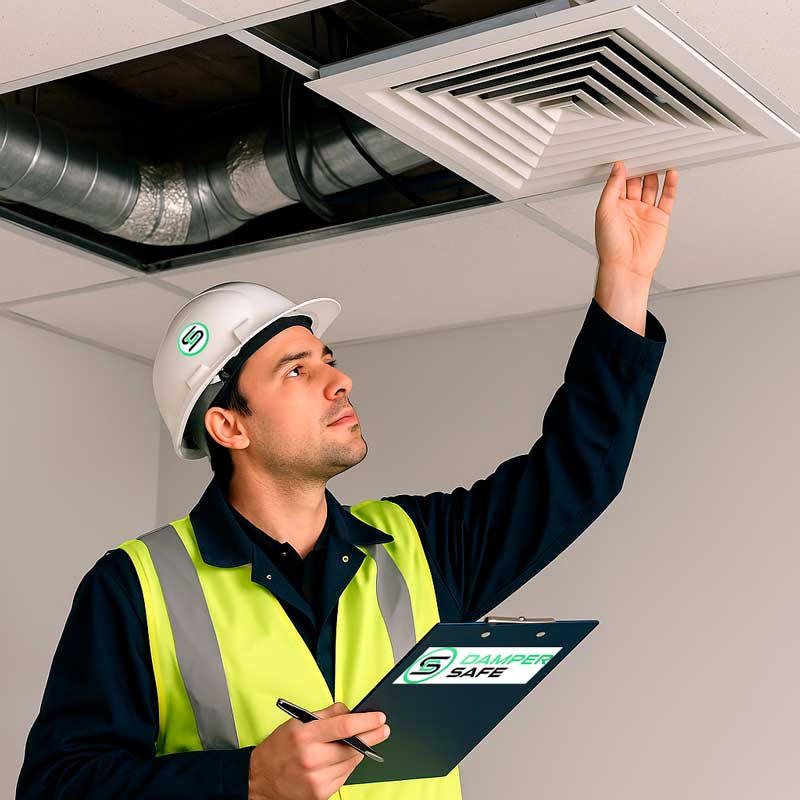
Fire damper services are relevant to anyone responsible for a building with ductwork, air conditioning or ventilation systems passing through fire zones or compartment lines.

Ventilation-System-Compliance--2024-UK-Regulations-Impacting-Decommissioning
  • Commercial offices.
  • Schools and colleges.
  • Healthcare premises.
  • Hotels and hospitality buildings.
  • Restaurants and commercial kitchens.
  • Residential blocks.
  • Public buildings.
  • Shopping centres.
  • Industrial and warehouse premises.
  • Managed multi-occupancy buildings.

A survey is particularly useful if the building has no current asset register, if the last inspection date is unknown, if refurbishment work has taken place or if there are concerns about access to fire and smoke dampers.

Why Choose Damper Safe?

Choosing Damper Safe means choosing a partner committed to your safety and compliance. Whether you manage properties in Canterbury, Maidstone, Bromley, or central London, our focus on quality, innovation, and customer service sets us apart.

We ensure that your fire safety systems in London and Kent are always up to code and ready to protect your building and its occupants.

Fully Insured

Rest easy with Damper Safe. We are fully insured, prioritising your peace of mind and protection. We are also certified and trained in all aspects of fire safety.

Satisfaction Guarantee

With Damper Safe, your satisfaction is ensured. We stand by our services to deliver reliable and effective fire safety solutions for your premises.

Customer Service

Our customer service is important to us. We are dedicated to providing exceptional support, ensuring your needs are met on time and within budget.

Affordable Services

Experience top-notch fire safety without breaking the bank. Our services are affordable, delivering value without compromising quality or safety.

Book a Fire Damper Survey in London

If your building has missing records, unknown damper locations or overdue inspection requirements, Damper Safe can help.

Call 07817 412151 or email info@dampersafe.co.uk to request a quotation for fire damper surveys and inspections in London.

Frequently Asked Questions

A fire damper survey is an inspection used to locate, identify and document fire dampers within a building. It helps establish whether dampers are accessible, what condition they appear to be in and whether further fire damper testing or remedial attention may be needed.

Fire dampers should generally be tested at least once every 12 months. BS 9999:2017 recommends annual testing by a competent person, with more frequent testing in some environments where dust, grease, pollution or higher risk conditions are present.

Fire damper testing supports the legal duty to maintain fire safety systems under the Regulatory Reform Fire Safety Order 2005. The Responsible Person must ensure appropriate fire safety measures are maintained. Regular inspection, testing and documentation help demonstrate that these duties are being managed.

If a fire damper cannot be accessed, this should be recorded in the report. It may mean that access panels, further investigation or other remedial work are needed before the damper can be properly inspected or tested.

Not always. A survey may identify dampers and check visible condition and access. Drop testing or operational testing may be included where it has been agreed, where access is suitable and where the damper type allows it. The scope should be confirmed before the visit.

Damper Safe provides fire damper surveys, inspections and testing, not general fire risk assessments. The cost of a fire risk assessment in London depends on the building size, use and complexity, and should be quoted by a qualified fire risk assessor. If you need fire damper inspection or survey work, Damper Safe can quote for that specific service.