Fire Dampers in Office Buildings: Ensuring Workplace Safety & Compliance
 Introduction: Fire Safety in Modern Office Environments
Office buildings are among the most common commercial properties in the UK — yet they’re also some of the most complex when it comes to fire safety. With multiple floors, open-plan layouts, suspended ceilings, and extensive HVAC systems, the risk of smoke and fire spread is significant if passive protection measures aren’t properly maintained. One of the most critical components in this system is the fire damper in office buildings.
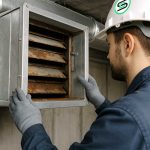
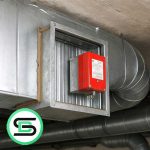
Fire dampers are designed to stop fire and smoke from travelling through ductwork during a blaze, protecting escape routes and giving employees vital time to evacuate safely. In busy commercial environments where hundreds of people may occupy a single floor, ensuring your fire damper in office buildings is correctly installed, tested, and maintained is essential for compliance and duty of care.
Why Fire Dampers Are Essential in Office Buildings
According to the UK Home Office Fire Statistics, nearly 2,000 fires occur in offices and commercial workplaces each year. While modern fire alarms and sprinklers play an important role, they cannot prevent smoke from spreading through interconnected ventilation systems. That’s where the fire damper in office buildings becomes a frontline defence.
In multi-storey and open-plan offices, a single fire can spread quickly through air ducts, feeding oxygen and carrying smoke into escape routes and stairwells. Properly functioning fire dampers automatically close upon detecting heat, sealing off the duct and helping to compartmentalise the fire. This containment not only protects people but also limits property damage and downtime.
Legal Responsibilities and Fire Safety Regulations
UK law places strict obligations on employers, landlords, and facilities managers to maintain a safe working environment. Under the Regulatory Reform (Fire Safety) Order 2005, every employer or designated “responsible person” must ensure that fire safety systems — including the fire damper in office buildings — are installed, tested, and maintained.
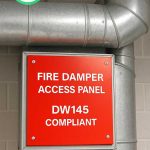
Fire dampers should be tested at least once every 12 months, as specified in DW145 and BS 9999: Code of Practice for Fire Safety in the Design, Management and Use of Buildings. Neglecting testing could lead to enforcement notices from the Fire and Rescue Service or prosecution under the Fire Safety Order.
For details on responsibilities and accountability, see our related article: Who Is Responsible for Fire Damper Testing in the UK?
Common Office Fire Damper Challenges
Unlike industrial or healthcare settings, office buildings present unique challenges for maintaining the fire damper in office buildings. Some of the most common issues include:
- Limited access panels: Ceiling-mounted ducting often lacks sufficient access points, making inspection difficult.
- Unrecorded dampers: Many office refurbishments overlook existing dampers, leaving them untested or undocumented.
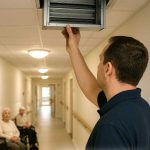
- Corrosion or dust buildup: Air-conditioned environments can conceal dampers affected by condensation or debris, impacting closure performance.
- Blocked escape routes: Poorly maintained HVAC systems can allow smoke to enter corridors and stairwells during a fire.
To understand how these issues can escalate, our post Common Fire Damper Failures and How to Prevent Them explores typical maintenance and testing oversights across UK buildings.
Integrating Fire Dampers into Workplace Safety Plans
Ensuring your fire damper in office buildings is fully operational should form part of a wider workplace fire safety strategy. Alongside routine testing, businesses should implement:
- Evacuation planning: Every employee should know their escape route and designated assembly point.
- Fire drills: Regular evacuation drills help confirm that systems — including dampers and alarms — respond correctly.
- Risk assessments: Each floor’s fire risk assessment must include damper locations and access points.
- Maintenance records: Keep digital evidence of every test and remedial action to demonstrate compliance.
Failing to integrate the fire damper in office buildings into safety documentation could lead to legal liability in the event of an incident. Facilities managers should work closely with certified specialists to ensure all assets are logged and tested on schedule.
How Damper Safe Ltd Supports Office Fire Safety
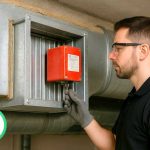
At Damper Safe Ltd, we help organisations across the UK maintain compliance through scheduled fire damper testing, cleaning, and maintenance services. Our engineers provide full access panel installation, photographic evidence, and asset registers to support building safety audits.
Whether you manage a small office block or a multi-tenant high-rise, we ensure that each fire damper in office buildings performs as intended — protecting employees, visitors, and business continuity.
Our services follow the latest industry guidance outlined in Fire Damper Installation Best Practices (UK) and align with insurance and CQC compliance requirements.
Conclusion: A Safer Workplace Starts with Compliance
The fire damper in office buildings may be hidden behind ceilings or ductwork, but its role in workplace safety is indispensable. Regular inspection and testing not only safeguard lives but also demonstrate your organisation’s commitment to regulatory compliance and employee wellbeing.
For professional guidance on fire damper inspections and testing, contact Damper Safe Ltd today to schedule your compliance review.
For official guidance, see the Health and Safety Executive’s Fire Safety at Work resource.